Scorpio News
Onboard Carbon Capture Pilot Program
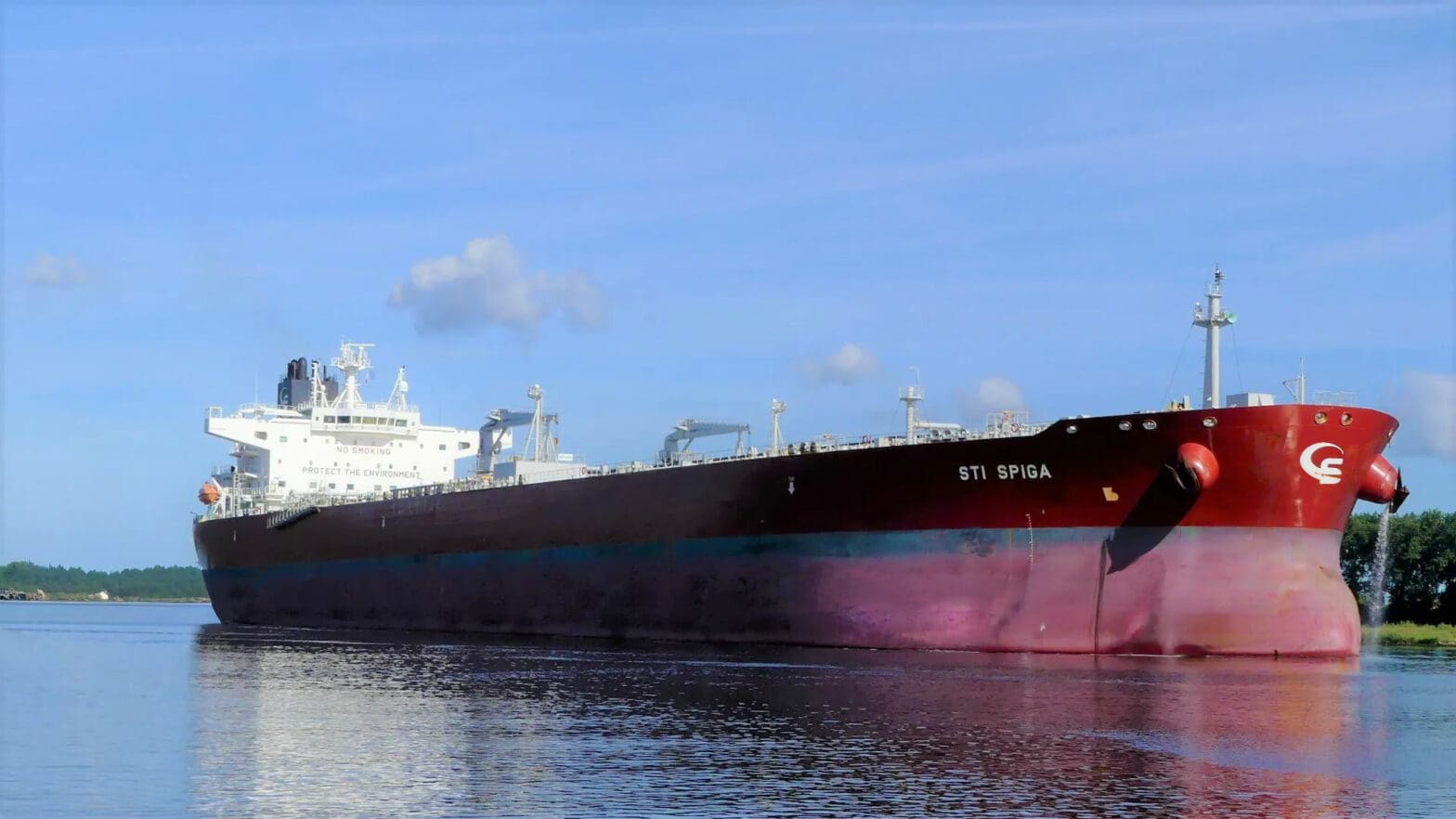
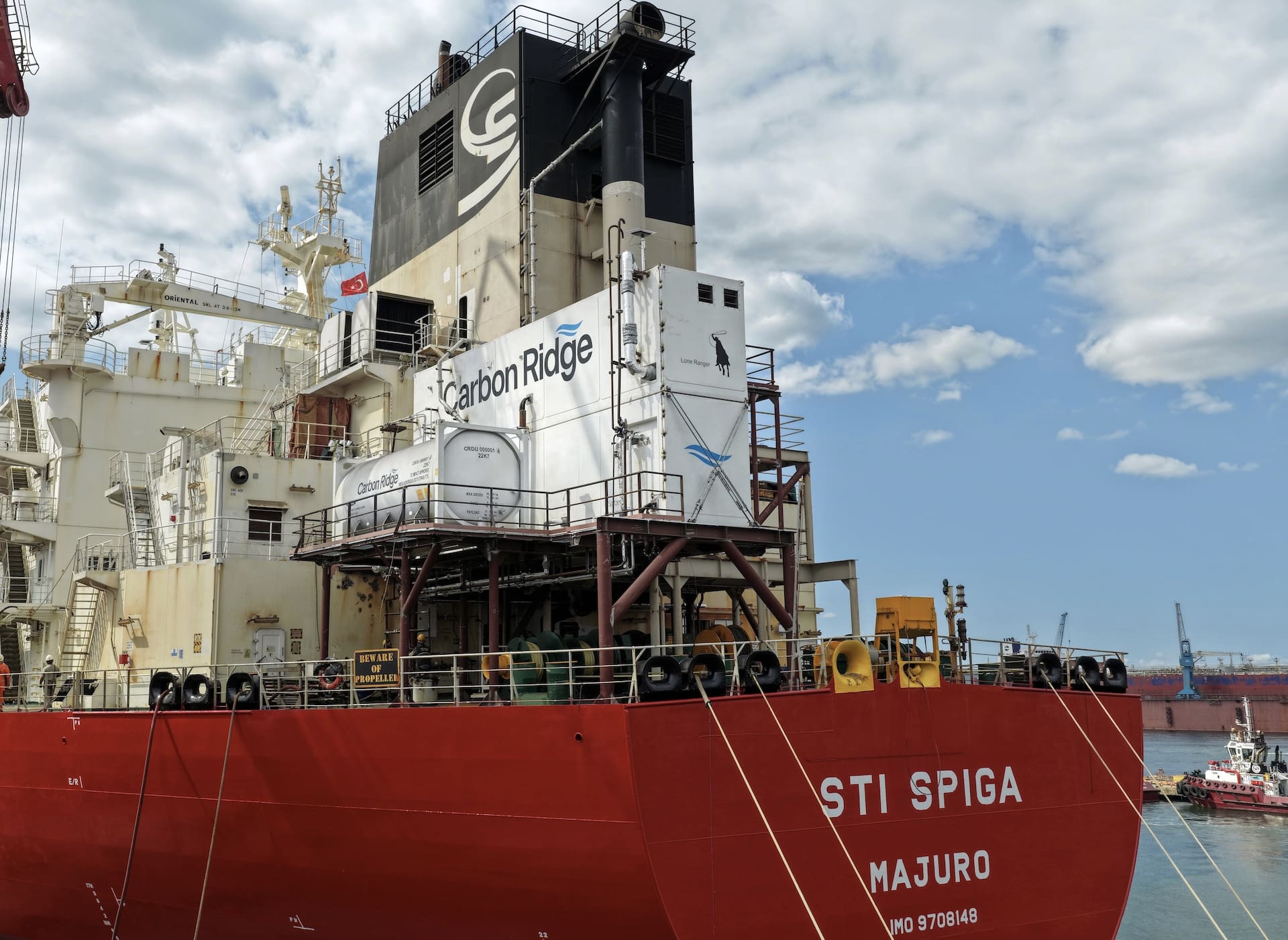
This past summer, Scorpio Tankers, Inc. took another bold step in furthering maritime sustainability. Partnering with Carbon Ridge, a US-based company developing maritime onboard carbon capture systems (OCCS), they have created the first pilot program of its kind to be deployed in commercial shipping. Installed aboard the STI SPIGA at Besiktas Shipyard in Turkey, this project marks a groundbreaking milestone in the advancement of shipboard decarbonization technology. Unlike traditional systems adapted from land-based applications, Carbon Ridge’s OCCS is purpose-built for the maritime environment. Its compact, modular design reduces space requirements by up to 75% compared to conventional carbon capture units, offering a practical, scalable, and fuel-agnostic solution for shipowners. The system’s flexible configuration allows it to be installed either vertically or horizontally, making it suitable for a wide range of vessel types, from retrofitted ships to newbuilds.
How the System Works
Carbon Ridge’s OCCS captures CO₂ directly from the ship’s exhaust stream, where it is then compressed, liquefied, and stored safely onboard for the duration of the voyage. Once ashore, the captured carbon can be transported for sequestration or reuse, ensuring compliance with both maritime and regional environmental regulations. The technology is capable of achieving up to a 90% reduction in CO₂ emissions, while also eliminating over 99% of particulate matter, NOX , and SOX . This comprehensive emission reduction makes the OCCS one of the most advanced systems currently being tested in the maritime sector.
A Shared Commitment to Innovation
“This pilot project is a milestone for our industry,” said Cameron Mackey, Chief Operating Officer of Scorpio Tankers. “Carbon Ridge,” he continued, “not only represents the leading edge of CCS technology, but also understands our industry’s unique needs. We’re proud to be part of this pilot and look forward to the results.” For Scorpio Tankers, the initiative underscores a deep commitment to sustainable innovation and operational excellence. The company continues to explore scalable solutions that align with the International Maritime Organization’s 2030 and 2050 decarbonization targets, demonstrating a proactive approach to reducing environmental impact while maintaining performance standards across its fleet.
Technology Designed for the Future
Carbon Ridge’s approach combines proven centrifugal technology with a compact, marine-optimized design that minimizes both capital investment and operating costs. The system is futureproof and compatible with any fuel type, offering shipowners the flexibility to advance their decarbonization strategies without requiring extensive propulsion overhauls. “Our system was designed specifically for the maritime sector,” explained Chase Dwyer, CEO and Founder of Carbon Ridge. “It’s not an adaptation of land-based CCS technology—it’s purpose-built for ocean operations. This pilot represents a critical step toward scalable carbon capture for shipping.”
Steering Toward a Cleaner Tomorrow
As the pilot project progresses on STI Spiga, Scorpio continues to explore innovative solutions that reduce the environmental impact of shipping while maintaining safety and efficiency. Together with partners like Carbon Ridge, we are charting a course toward a cleaner, more sustainable future at sea.
This article featured in Beacon 29; while onboard, all issues are accessible on Docmap.